GearDüsseldorf
Power, cabling and what the halls charge for it
Jan–Nov
Electricity at an exhibition hall is not one charge but four, and only one of them is the power you actually use. How the supply at the Düsseldorf grounds is ordered and billed, what a standing connection is for, how to size a load without guessing, and the deadline that doubles the price.
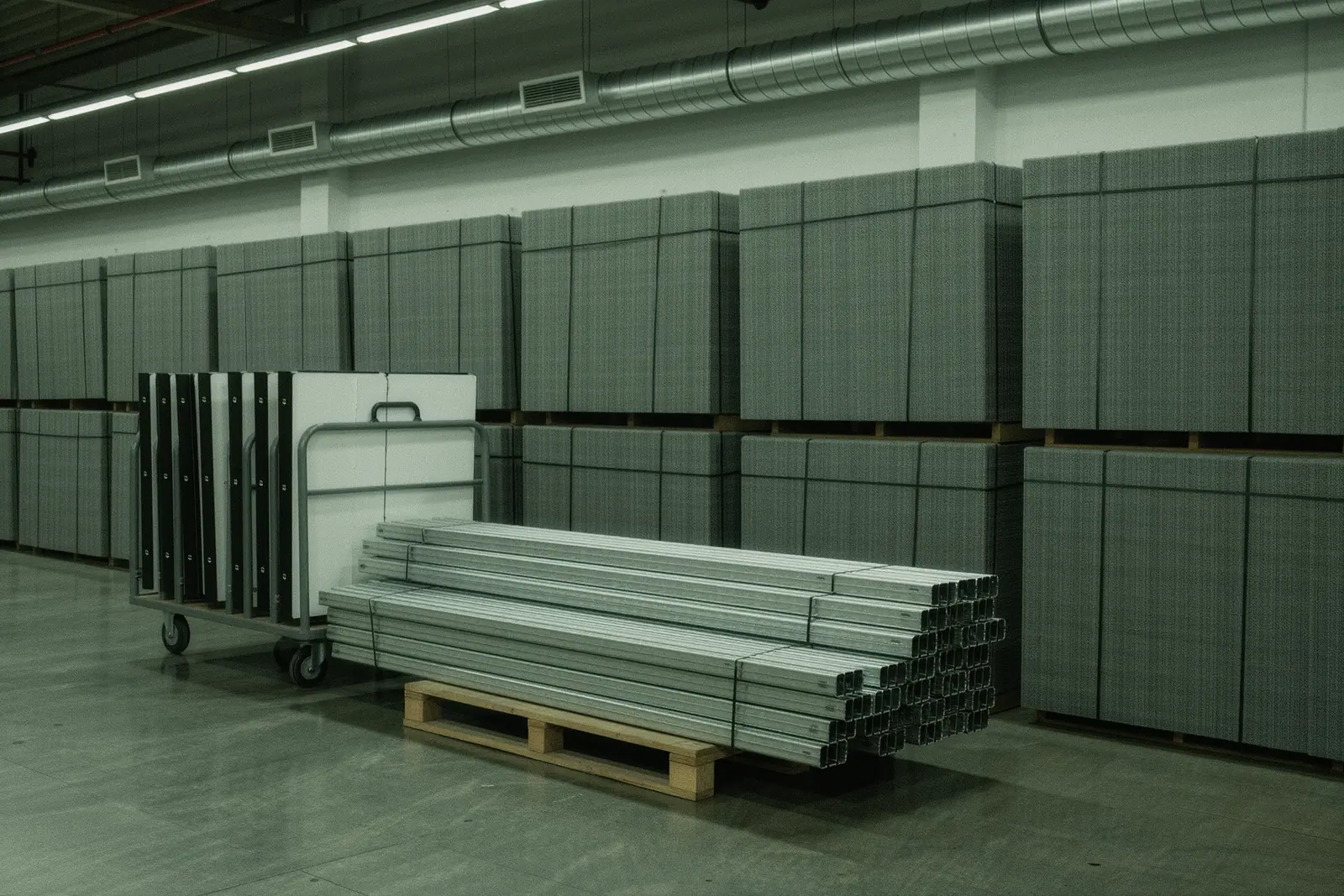
The order form asks for a number in kilowatts and offers no help arriving at it. Most people either copy last year’s figure or guess upwards, and both choices cost money in the same direction, because at the exhibition grounds the largest single line on an electrical order is usually the capacity you asked for rather than the energy you consumed.
Getting this right is arithmetic, and it takes about twenty minutes.
Four charges, not one
| Charge | What it is for | How to control it |
|---|---|---|
| Connection capacity | The size of the supply reserved for you | Size it from device ratings |
| Connection work | Bringing the cable to your stand boundary | Fixed; depends on hall and position |
| Consumption | The energy actually used | Small relative to the rest |
| Round-the-clock supply | A second, unswitched circuit | Order only what genuinely needs it |
| Late order surcharge | Missing the deadline | Entirely avoidable |
The last row is the one that turns a manageable line into an unpleasant one. Halls publish an order deadline for services because their own electrical contractors plan the hall floor from those orders. Past the date, the increase is proportional and it is applied without discussion.
Water, waste and compressed air sit on the same order form and run to the same deadline, and they are worth deciding at the same moment even if the answer is no. A stand with a working demonstration, a coffee bar with a plumbed machine or anything that rinses a product needs a supply and a drain brought to the stand boundary, and at the halls here that is groundwork under the floor rather than a tap. It is the one service that genuinely cannot be added during build-up.
Sizing the load without guessing
List every device, take the rating from the plate rather than from memory, total it, and add roughly a third for the things you forgot and the inrush when everything switches on together.
A worked example for a stand of about thirty square metres:
- Twelve LED spotlights on the graphic wall and product: a modest total, and an order of magnitude below what the same lighting scheme would have drawn with halogen fixtures.
- Two 65-inch screens and two media players: small, but continuous.
- One under-counter fridge: small in average draw, larger at start-up, and it needs the round-the-clock circuit.
- A coffee machine: the biggest single item on most stands by a wide margin, and the reason stands trip.
- Laptop and phone charging for six people: negligible individually, not nothing in total.
Add those, add the margin, and you will usually land well below the figure an experienced colleague suggests from memory. LED lighting genuinely changed this and the habits have not caught up.
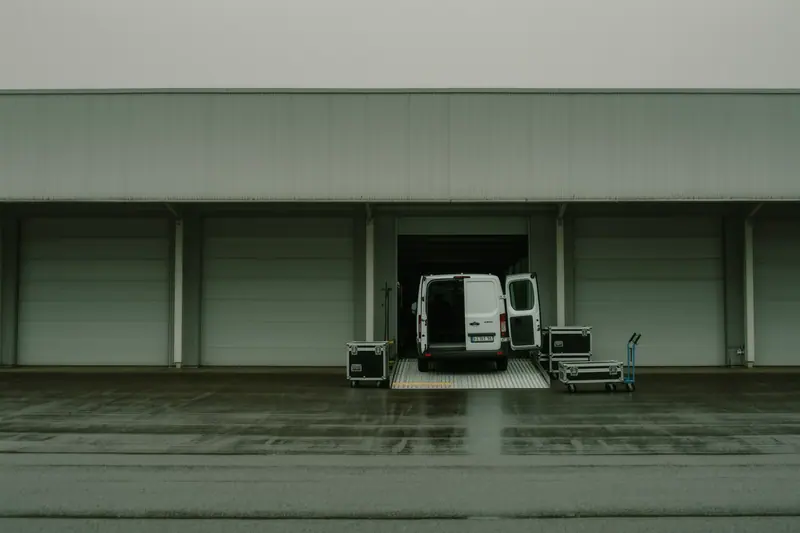
The coffee machine problem
Almost every tripped stand in almost every hall traces back to hospitality. A bean-to-cup machine, a water boiler and an induction plate are each a substantial load, and stands put all three behind the same counter on the same circuit.
Two fixes, both cheap. Split the hospitality equipment across separate circuits at the distribution board, and stagger what runs when — the water boiler does not need to be on while the coffee machine is grinding. If the reception on your stand is an actual event with hired catering equipment, size the supply for that hour rather than for the average day.
Sockets are a position problem
Ordering enough total power and then putting all the sockets in one place is the other common failure. Draw the stand and mark where a plug is needed:
- Behind the counter, for the payment terminal and the kettle.
- At the screen positions, one per screen plus one spare.
- Low on the graphic wall, if anything is backlit.
- In the storage cupboard, for charging overnight on the standing supply.
- At the meeting table, because visitors ask.
Six positions with two sockets each beats one position with twelve, and it costs about the same. Retro-fitting a socket once the flooring is laid is a genuinely awkward job.

Why the same order costs differently in two Marches
Düsseldorf’s halls run different fairs in different years, and the service tariffs are set per event rather than per site. A March in a year when one of the very large biennial fairs is in town is not the same commercial environment as the March after it, and the deadlines fall at different points relative to your own planning cycle.
That is the argument for reading the service manual for your specific fair rather than working from a colleague’s file. The structure of the charges is stable; the dates and the rates are not.
What to do on the day it trips
Know in advance who resets it and how they are reached, and put that number on the inside of the counter door rather than in one person’s phone. During opening hours the hall’s electrical contractor is working the whole floor, and the difference between a fifteen-minute outage and a two-hour one is entirely about how quickly the call was made.
Then reduce the load before they arrive. Turn the coffee machine off, leave the screens on. A stand with working lighting and a dark hospitality corner reads as normal. A dark stand with hot coffee does not.
What to check before you book
- Add up the actual load of every device on the stand before ordering, and add a third as margin. Do not order by stand size.
- Decide early whether you need a round-the-clock supply. Fridges, chargers and anything that boots slowly do.
- Find the hall service order deadline and treat it as immovable. The surcharge past it is a proportion, not a fee.
- Check whether the connection charge, the consumption charge and the connection work are quoted separately.
- Confirm who does the distribution inside the stand and whether their work needs a certificate for the hall.
- Count sockets by position, not by number. Six sockets in one place and none at the counter is the usual mistake.
- Ask what happens on a trip: who resets it, how they are reached, and how long it takes during opening hours.
Questions people actually ask
- How is exhibition stand electricity billed?
Usually as a connection of a stated capacity, plus the work of bringing it to your stand boundary, plus metered or estimated consumption, plus anything extra such as a round-the-clock supply. The capacity charge is normally the largest of the four, which is why over-ordering costs real money and under-ordering costs a tripped stand. Check the tariff structure in the service manual for your fair.
- What is a standing or round-the-clock supply?
The general stand supply is switched off outside opening hours. A round-the-clock supply stays live overnight, and you need it for refrigeration, charging cabinets, anything with a slow boot sequence and any security equipment. It is ordered separately and billed separately, and it is the item most often discovered on the first morning rather than on the order form.
- How much power does a normal stand need?
Far less than it used to, because LED lighting and modern screens changed the arithmetic. A modest stand with LED spots, two screens, a fridge and laptop charging can often run on a single-phase supply, where the same stand a decade ago needed three-phase. Work it out from the device ratings rather than copying the previous order, which is where over-ordering comes from.
- Can I use my own extension leads?
Inside your own stand, generally yes, provided they are in good condition and appropriately rated, but halls run safety inspections during build-up and domestic leads daisy-chained across a floor will be pulled out. Anything crossing an aisle needs a proper cable ramp. The connection up to the stand boundary is never yours to make.