GearDüsseldorf
Catering equipment hire for a corporate reception
All year
A reception for eighty needs about nine hundred pieces of glass, somewhere to wash them, and a power supply that was ordered a month earlier. What catering equipment hire in Düsseldorf covers, the quantities that actually work, and the breakage and cleaning terms that decide the final invoice.
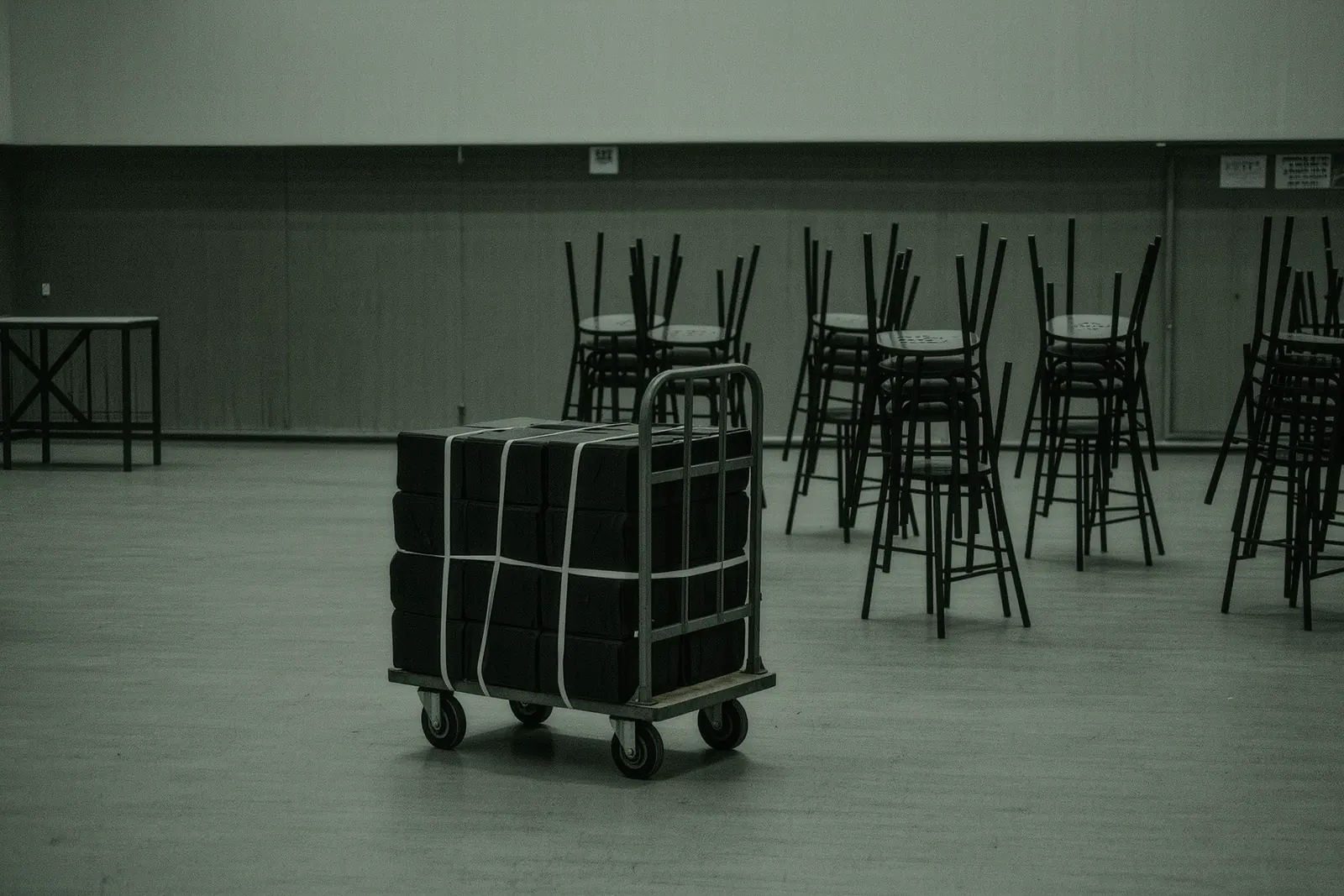
Eighty people, three hours, drinks and something served warm. That is a straightforward brief and it needs roughly two hundred and forty glasses, a hundred and sixty small plates, somewhere to keep food at temperature, a bar to work behind, and a power supply somebody ordered four weeks ago. The catering is the easy part. The equipment is where receptions come apart.
In Düsseldorf there is a further wrinkle: a lot of corporate hospitality happens either inside a hall at the exhibition grounds, where every service is a formal order with a deadline, or in a converted space along the water with a beautiful room and a kitchen that amounts to a sink.
What is on a typical order
| Category | Items | Rule of thumb for 80 guests |
|---|---|---|
| Glassware | Wine, water, sparkling, beer | 3 per guest, plus 10 per cent spare |
| Crockery | Canapé plates, side plates | 2 per guest for a standing reception |
| Cutlery | Forks, small knives | 2 sets per guest |
| Hot holding | Chafing dishes, heated cabinet | 1 chafer per dish being served |
| Cold holding | Fridges, ice tubs, ice | 1 under-counter fridge per bar position |
| Bar | Mobile bar unit, speed rail, bins | 1 bar per 60 guests, 2 per 80 if timed |
| Furniture | High tables, stools, linen | 1 high table per 6 standing guests |
| Back of house | Crates, trolleys, waste bins, mats | Always more than quoted |
| Coffee | Urn or bean-to-cup, cups, saucers | 1 machine per 60 for a served finish |
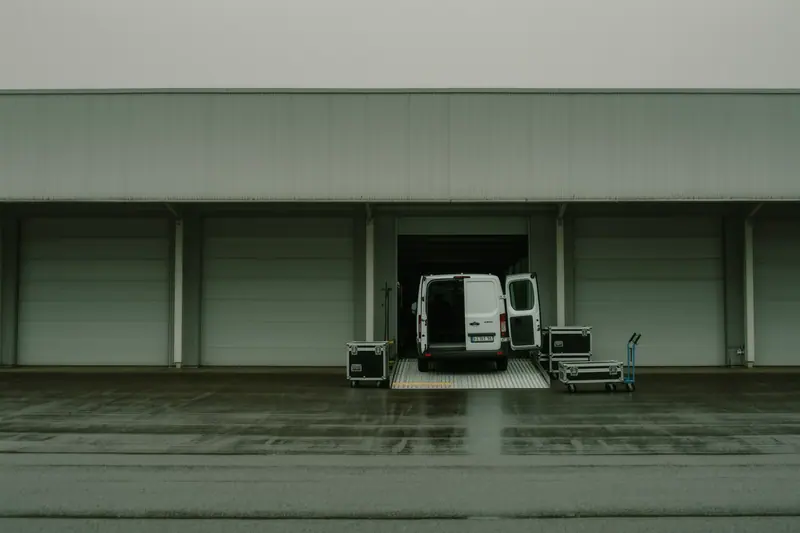
The line most often left off is the back of house. Crates and trolleys are how the equipment moves from the delivery point to the room and back, and in a hall at Stockum or in a warehouse space on the water that distance can be a hundred metres of concrete. Ask whether they are in the price.
Power, before anything else
Every heated item on that list is a real electrical load. A coffee machine, two heated cabinets and an induction plate on the same domestic circuit will trip it during the first course, and it will trip again when someone resets it.
Do the arithmetic in advance: list every heated or cooled item, note the rating, total it, add a third as margin, and take that figure to the venue. At the exhibition grounds this becomes a specified supply on the electrical order form, with a deadline and a late surcharge. In a hired room, it is a question you ask before you sign, because the answer is sometimes that the building cannot do it and you are hiring a generator.
Breakage and cleaning, which is the real price
Two terms decide the final invoice more than the hire rate does.
The cleaning model. Returned washed, or returned dirty with a per-item charge. For an event in a hired space with no dishwasher, returned dirty is the only workable option, and it should be priced in from the start rather than discovered on the invoice.
The breakage rate. Every hire company charges a replacement figure for broken and missing items, and on a standing reception with a bar you will lose glasses. A realistic loss rate on a three-hour drinks event is a few per cent, and it climbs with the length of the evening. Some companies offer a damage waiver; compare its cost against your honest estimate rather than a hopeful one.
Count the return yourself, or have someone count it, before the crates leave. Disputes about counts are settled by whoever has a signed sheet, and that is usually not you.
The Düsseldorf calendar, applied to catering kit
Local hire depots follow the halls. During the big weeks, stand hospitality across several halls at once consumes an enormous quantity of glassware, and the depot serving your eighty-person reception in the city centre is serving four hundred exhibitor stands the same morning. Delivery windows narrow, substitution becomes common — a different glass, a different plate — and the crew arrive late because they are on their third drop.
The mirror image is August and the flat weeks in late summer. Everything is on the shelf, the delivery slot is whenever you like, and you get the glass you actually chose.
A sequence that works
- Fix the guest number and the format. Standing and seated are different orders, not different quantities of the same order.
- Write the menu with the chef, then derive the equipment from it rather than ordering a package.
- Total the electrical load and confirm the supply with the venue.
- Place the hire order three to six weeks out, longer in a busy hall week.
- Book delivery for the day before and collection for the day after.
- Agree the cleaning model and the breakage terms in writing.
- Count in, count out, and photograph the crates.
The most useful single upgrade on this list is a second bar position. Eighty people served from one bar produces a queue at the two moments everyone arrives and everyone reaches for a drink at once, and the queue is what people experience as the event being badly run. It costs a fraction of what the furniture does and it changes the evening.
What to check before you book
- Count glassware at three pieces per guest for a three-hour reception, not one. Washing between courses is not realistic at a stand-up event.
- Confirm whether items are returned washed or dirty, and what the charge is for each. This single term moves the invoice more than the hire rate.
- Establish the power draw of every heated item and add it up before you order the electricity supply.
- Ask whether crates, trolleys and linen bags are included in the delivery or hired separately.
- Check the breakage rate charged per item and whether a damage waiver is offered. Compare the waiver against the realistic loss on a standing event.
- Book the collection for the day after, not the same night. Loading crates at one in the morning is how glasses get broken.
Questions people actually ask
- How much glassware should I hire for a reception?
Roughly three glasses per guest for a reception of two to three hours, and more if there is a change of drink between arrival and dinner. People put glasses down and take fresh ones; that behaviour, not consumption, sets the number. Hiring the extra is cheap. Running out at the point where the speeches finish is the failure people remember.
- Do I return hire crockery clean or dirty?
Both models exist and they price differently. Returned-dirty is convenient and carries a per-item cleaning charge; returned-clean is cheaper on paper and means someone is washing at midnight. For an event without a working kitchen on site, returned-dirty is almost always the right answer. Get the term in writing, because assuming the wrong one is a real cost.
- What power does catering equipment need at an event?
More than most venues casually offer. Heated cabinets, coffee machines and induction plates each draw substantial current, and three of them on one circuit will trip it. Add the ratings up, add a margin, and order the supply as a specified load rather than as "a few sockets". At the exhibition grounds this is a formal order with its own deadline.
- When is catering equipment hardest to hire in Düsseldorf?
In the weeks when the exhibition halls are full and every stand is running hospitality, and again in the run-up to the year-end company season in December. Both pull the same regional stock. Late summer, particularly August, is the easy window, when depots have everything on the shelf and delivery slots are flexible.