GearDüsseldorf
Hiring stand furniture for a Düsseldorf hall
Jan–Nov
Counters, stools, high tables, a lockable cupboard, a coat rail — none of it is yours, and all of it arrives on a trolley two days before the doors open. What a furniture order for a Düsseldorf hall actually contains, how the exhibition weeks move the price, and the quantities that leave visitors standing.
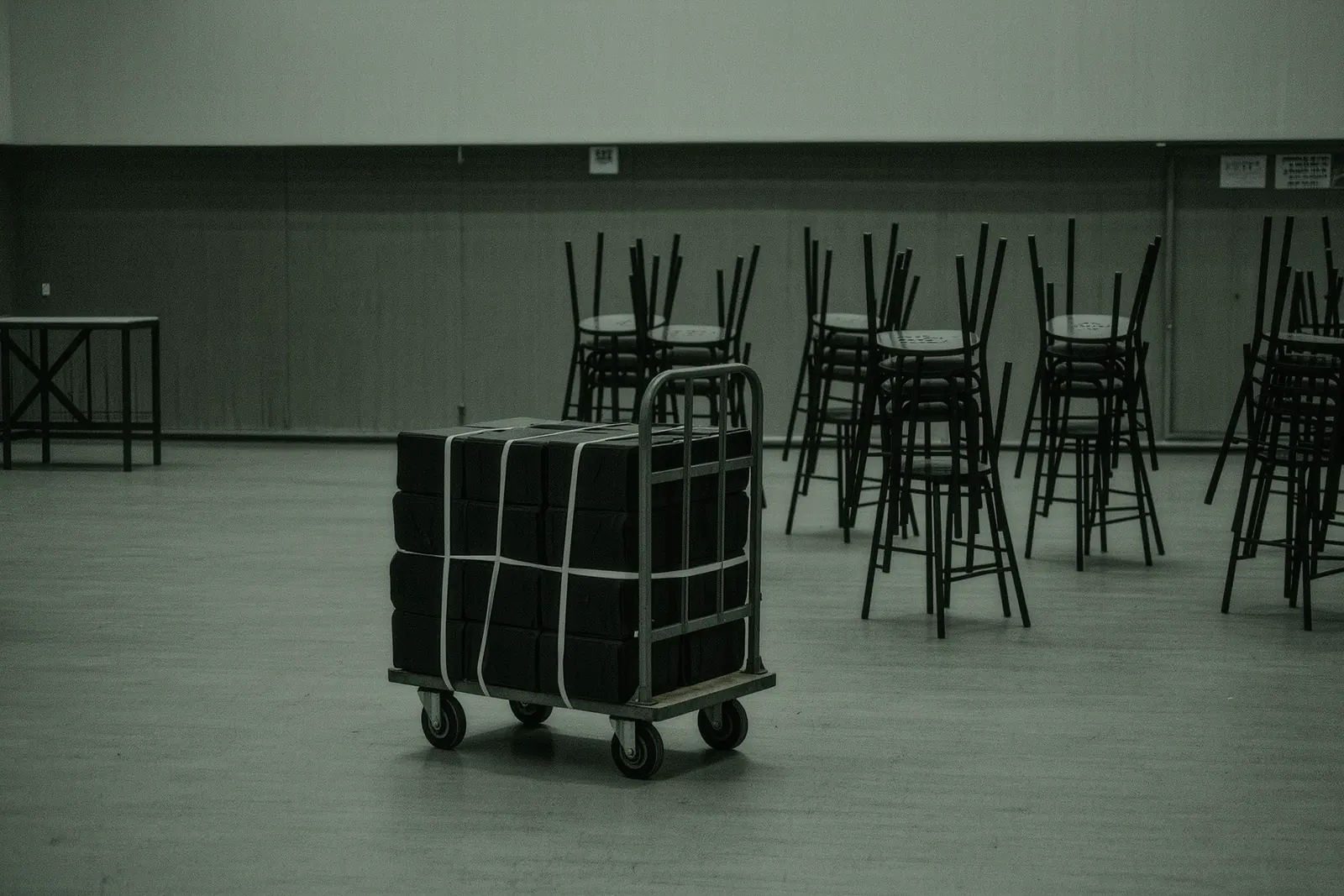
Every stand drawing looks finished. The render has a counter, four stools, a round table with two chairs, a coat rail in the corner — and not one item of it belongs to you. On a hall floor at the exhibition grounds out at Stockum, almost all of it arrives on a trolley two days before the doors open and goes back on the same trolley the night they close.
Furniture is the line most exhibitors treat as an afterthought and then find sitting somewhere near a third of the stand invoice. It is also the easiest line to get wrong, because the quantities are set by how the stand gets used, not by how many square metres it covers.
What is actually on the order
| Item | Sensible order for a 30 m² stand | Where it goes wrong |
|---|---|---|
| Info counter, lockable | 1 | Ordered without the internal shelf, so nothing stacks |
| Bar stools | 4–6 | Ordered by floor area, so the stand fills with seats |
| High tables | 2–3 | One per two staff on shift, not one per stool |
| Meeting table and chairs | 1 set of 4 | Fine, until it blocks the only open corner |
| Lockable cupboard | 1 | Forgotten, then bags live behind the counter |
| Coat rail and hangers | 1 | Skipped in autumn, when it matters most |
| Literature stand | 1–2 | Ordered instead of a counter shelf, which is cheaper |
| Under-counter fridge | 1 | Ordered late, so it arrives warm on day one |
| Waste bin | 2 | Always one short |
| Planting | Optional | The one line worth cutting first |
The counter and the lockable cupboard are the two items that decide whether a stand runs well. Everything else is comfort. A stand without secure storage puts coats, laptops and sample cases on the floor behind a panel, and by the third morning nobody can find anything.
The price follows the calendar, not the month
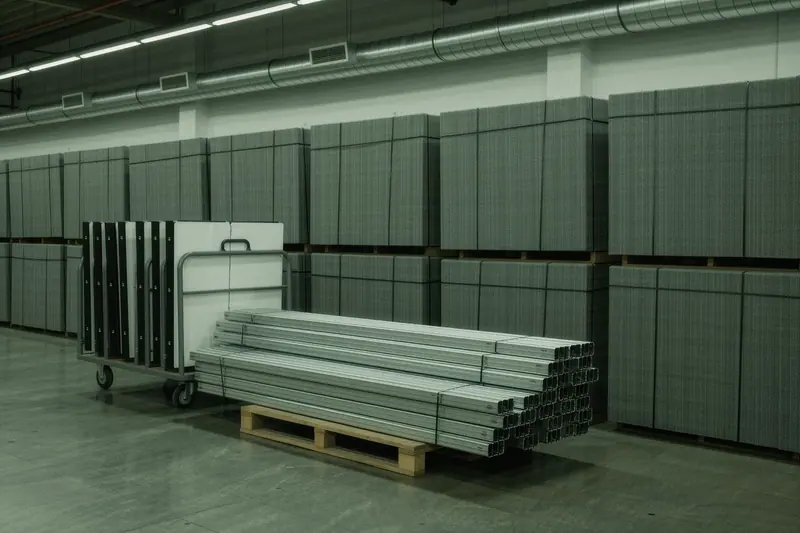
Düsseldorf does not have a high season in the way a coastal city does. It has a hall calendar. The depots that supply this city work to the weeks when the halls at Stockum are full, and those weeks are scattered across the year rather than bunched in summer.
A stool in a quiet March week and a stool in the same week as one of the very large autumn fairs are the same stool at meaningfully different money, because in the busy week the depot has run out of local stock and is trucking it in from the Ruhr, from the Rhine-Main area, sometimes from further. The furniture rate holds roughly steady; the logistics line does not.
Two consequences worth planning around. First, August is genuinely quiet here. The halls mostly rest, the city empties, and an internal company event in August gets attention and stock that the same event would not get in September. Second, the biennial and four-yearly fairs distort everything around them. When one of the giants lands, regional supply is committed the better part of a year in advance and even a small stand ends up on a waiting list.
Quantities, and the way people misjudge them
- Seats are for staff, not visitors. Unless the stand is built for scheduled meetings, seated visitors block the stand and standing ones cycle through it. Order stools for your team plus two.
- One high table per two people on shift. Any more and the open floor disappears; any fewer and conversations happen in the aisle.
- A metre of hanging rail from October onwards. This is a wet, cold city between the autumn fairs and the spring ones. Twelve coats without a rail is a pile on a chair.
- Two bins. One behind the counter for the team, one at the open edge. Halls charge for waste left loose in the aisle.
- One fridge, ordered for day minus two. A fridge delivered on the morning of day one is a warm box until lunchtime.
Delivery, storage and the empties nobody plans for
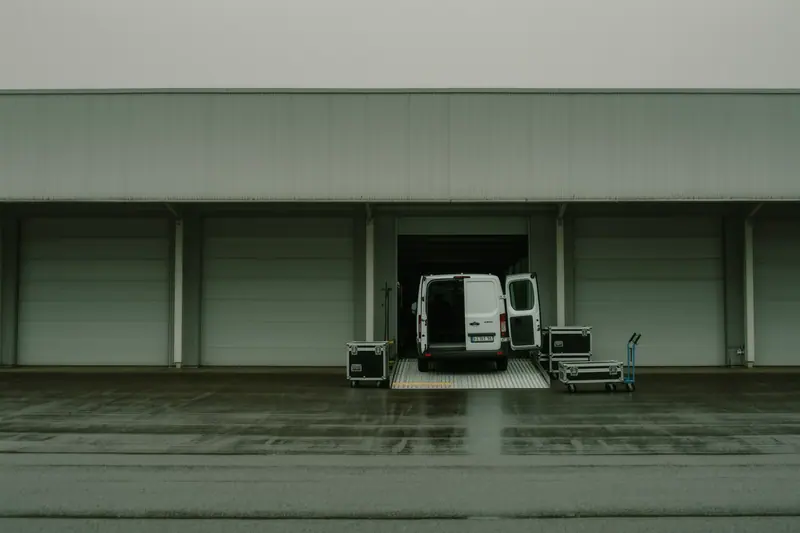
Furniture arrives inside your build slot and not before. That sounds obvious and it catches people every edition, because a depot promising “the day before” has no way of knowing whether a lorry will get a dock. The realistic sequence at a Düsseldorf hall is structure first, then flooring, then furniture, then technology, and each of those needs the aisle clear behind it. Once your carpet is down a loaded trolley across it is nobody’s favourite moment.
Then the packaging. Hire furniture arrives wrapped, and the wrapping has to go somewhere that is not your stand and not the aisle. Ask the supplier whether they take it away on the same visit. If they do not, you are paying the hall to remove it, and you are paying at exhibition rates.
What to put in writing
Ask for an inventory with dimensions in millimetres, a delivery window rather than a delivery day, a named contact who is physically in the hall during build-up, and a collection time on the closing evening. Collection is the one people leave vague, and a stand that has to be stripped by ten at night with the furniture still on it becomes an expensive hour.
If the budget has to give somewhere, cut the planting and the lounge seating, keep the counter, the lockable unit and the coat rail. And order the storage before you order anything else — it is the item that runs out first, and unlike a stool there is no substitute standing in the depot next door. If you are still working out which of these items your build already covers, the stand package inventory is where to start, and the delivery slot is what decides whether any of it turns up on time.
What to check before you book
- Order the lockable storage unit first. It is the item that sells out and the one item a stand cannot function without.
- Confirm the delivery is inside your build slot and not "the day before", which at the halls can mean a lorry that never gets a dock.
- Ask whether the price is per item or per event day. Long fairs are quoted both ways and the difference over eight days is large.
- Get the counter dimensions in millimetres, including the internal shelf height. Half of all storage complaints are a box that will not fit.
- Check who unpacks and removes the wrapping, and where the wrapping goes. Packaging left in the aisle is a chargeable problem.
- Photograph every piece on arrival. Damage claims on hire furniture are settled on the state of it at handover, not at collection.
Questions people actually ask
- How far ahead should I book stand furniture in Düsseldorf?
Six to ten weeks is comfortable for an ordinary week, and three to four months for one of the very large fairs that fills every hall. Regional depots hold a finite number of counters and lockable units, and those two items run out long before stools do. If the fair is one of the biennial giants, treat the previous edition as the deadline and order almost a year ahead.
- Is it cheaper to buy furniture than to hire it?
For a single appearance, no. For a company that exhibits four or five times a year in the same region, the arithmetic changes, but only once you count storage between events, a van, two people to load it and the repairs after every show. Most exhibitors who buy end up paying a warehouse to hold the furniture and hiring anyway when the schedule clashes.
- Does hire furniture come with the stand build?
Sometimes, and that is the confusion. A shell scheme or a package build often includes a counter, two stools and a waste bin, and everything else is a separate order. Read the package inventory line by line before you order anything, because paying twice for the same counter is a common and avoidable mistake.
- What happens if something arrives damaged?
Report it before you sign the delivery note and photograph it there and then. A replacement during build-up is usually possible if the depot is local and you have flagged it early enough, and close to impossible on the morning the doors open. Once you have signed clean, the damage is yours.