On the roadDüsseldorf
The low-emission zone and rented vehicles
All year
A green badge on the windscreen is one of those things you never think about until you are driving somebody else’s van through the middle of the city. What the environmental zone covers here, why the responsibility sits with you and not the rental desk, which rented vehicles actually fail, and the thirty seconds of checking that avoids all of it.
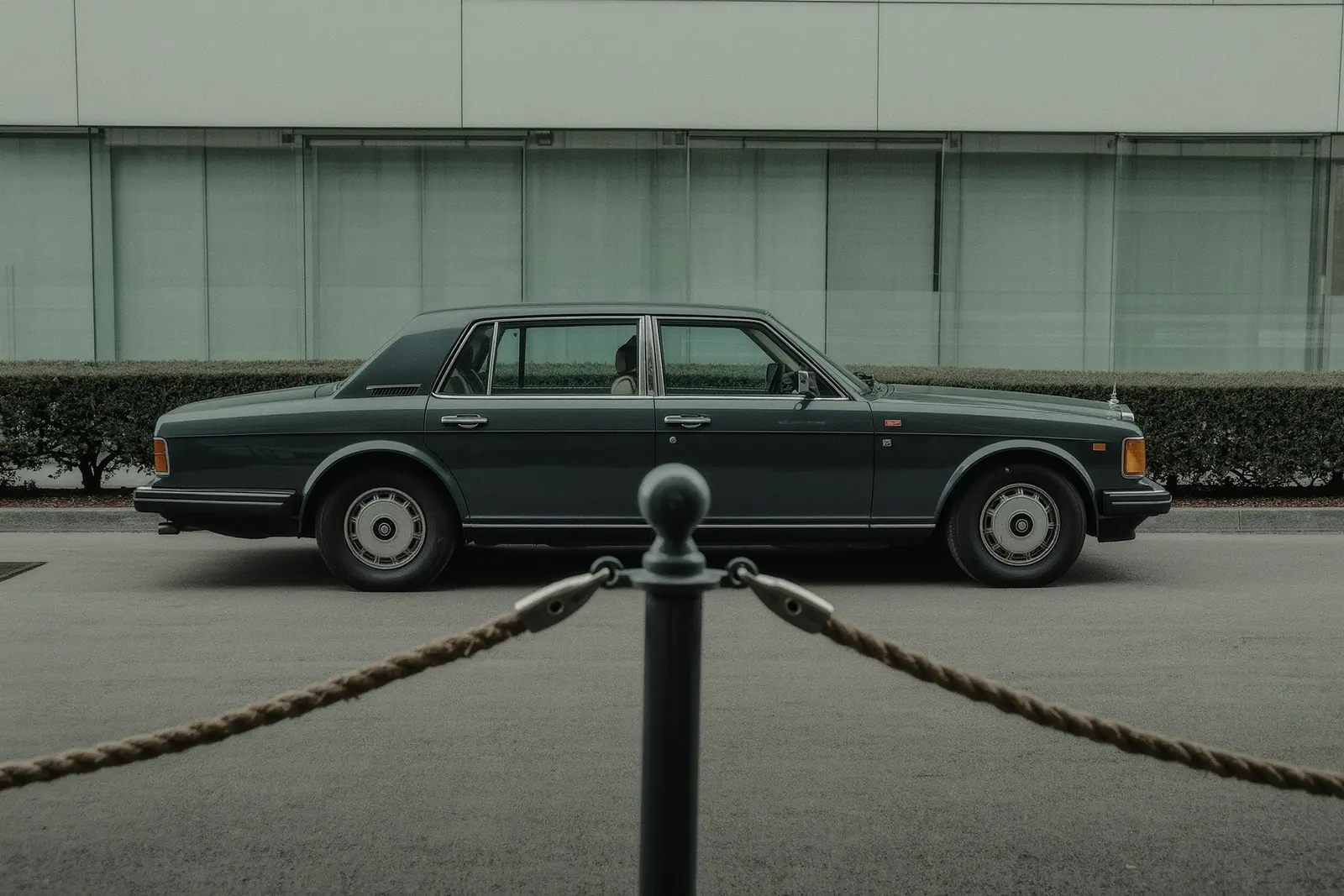
Nobody hires a car thinking about a sticker. Then somebody drives a hired van into the middle of a German city, and the sticker becomes the most expensive thing on the windscreen.
Düsseldorf operates an environmental zone, as most large German cities do. It is not exotic and it is not hard to comply with. It is simply one of those rules where the liability sits with whoever is holding the steering wheel, and hire customers are the people most likely to be holding a steering wheel attached to a vehicle they have never seen before.
How the zone actually works
The zone is marked at every entry point with a sign, and inside it a vehicle must display a valid badge in the windscreen. Badge classes are set nationally against the emissions class of the vehicle, not against its age or its fuel, and the class that admits you is set by the city.
Three things follow from that structure:
- The badge belongs to the vehicle, not to you. It is issued once and stays with the registration. Nothing you do as a hirer changes it.
- Foreign registration is not an exemption. A vehicle brought in from another country needs the same badge, obtained in advance.
- The zone boundary is not the ring road and not the old town. It takes in a wide area of the built-up city on both banks. Motorways running through are handled separately, which is exactly how people end up inside the zone without noticing: you leave the motorway and you are in it.
Which rented vehicles are actually the risk
| What you have hired | Realistic risk | What to do |
|---|---|---|
| Standard car from a German depot | Very low | Glance at the windscreen |
| Premium or performance car | Very low | Glance at the windscreen |
| Panel van from a local operator | Low, but not nil | Confirm at booking |
| Older self-drive van or box van | Real | Confirm in writing |
| Motorhome or campervan | Real | Confirm in writing |
| Vehicle hired in another country | Highest | Ask whether a badge has been obtained and fitted |
| Vintage or specialist vehicle | Depends entirely | Ask before you book |
The pattern is that ordinary hire cars are fine and everything unusual deserves a question. Rental fleets replace cars quickly, so the modern end of the market solved this problem years ago. The awkward end is the vehicle that exists because it is cheap: the fifteen-year-old van from a small yard, the imported motorhome, the hire lorry with a tail lift.

If you are hiring for a move, the question belongs in the same conversation as the size and the parking suspension — van hire for a flat move in Flingern covers the rest of that booking.
Who pays
You do. Entering a restricted zone without a valid badge is an offence committed by the driver, and rental contracts route any penalty back to the hirer, usually with a handling fee attached for the administrative work of identifying you.
That is the whole reason to do the windscreen check yourself rather than trusting the handover. It costs nothing, it happens before you move, and it is the only point in the process where the problem is easy to solve — a non-compliant vehicle identified on the forecourt is the desk’s problem, and a non-compliant vehicle identified on a city street is yours.
What has changed, and what might
Beyond the badge zones, several German cities have at times operated additional measures on particular corridors, aimed at specific pollutants and usually arriving through the courts rather than through planning. This city has been part of that story. Measures have been introduced, modified, and in places withdrawn again as air quality figures moved.
The honest advice is therefore procedural rather than factual: check the current position for your route close to your travel date, and treat the signs at the roadside as the authority over anything you read anywhere, including here. If you are hiring at the premium end, where cars are frequently newer but sometimes older and imported, the insurance small print is the other document to read for the same reason.
Planning routes around it, when it matters
For the vast majority of hires there is nothing to plan. You will be in a compliant car and the zone will be invisible.
Where it does matter is if you have hired something unusual for a specific job — a large van for a move, a motorhome for a trip east, a lorry for a stand build. In that case there are two workable approaches.
- Solve it at source. Hire a compliant vehicle. Any established operator in this region can confirm the badge class before you book, and a compliant van costs the same as a non-compliant one from a better yard.
- Route around the zone. Possible but tedious, because it means staying outside a large part of the city and reaching your destination from the outside. Fine for a warehouse on the edge of the region. Useless for a flat in Bilk.
The second approach also collapses the moment your plans change, which they do.
The one habit worth forming
Check the windscreen at handover, every time, including on the tenth hire of the year. It takes less time than adjusting the mirrors, and it converts an open-ended liability into a closed one. If the badge is missing, hand the keys back and ask for another vehicle before you sign — the desk has other cars, and in this city the only week they might not is the week the halls are full, which is covered in hiring a car in the exhibition weeks.
What to check before you book
- Look at the windscreen before you drive off and confirm a valid badge is fitted. It takes ten seconds and it is the only check that matters.
- Ask the desk to note the badge on the handover document if you are hiring anything older, larger or foreign-registered.
- Check the current zone boundary against your route rather than assuming the city centre is the whole of it. Zones extend well beyond the historic centre in most German cities.
- If you are hiring a van, a motorhome or a self-drive lorry, confirm compliance explicitly at booking. These are the vehicles that fail.
- For a vehicle hired outside Germany, confirm that a badge has been obtained and fitted. Foreign registration does not exempt you.
- Read the signs where you enter and leave the zone. Boundaries and any additional street-level restrictions change over time and the sign is the authority.
Questions people actually ask
- Do hire cars in Düsseldorf have the environmental badge?
Almost always. German rental fleets are modern and the badge is fitted at the point the vehicle enters service, so a standard car from a local depot will be compliant. The exceptions are worth knowing: older self-drive vans, motorhomes, specialist and vintage vehicles, and anything hired in another country and driven in. Check the windscreen at handover rather than assuming.
- Who pays the fine if a rented car is not compliant?
The driver. Entering a restricted zone in a vehicle without a valid badge is the driver’s responsibility, and rental contracts pass any resulting penalty on to the hirer along with an administration charge. Arguing that the desk handed you the vehicle does not usually change the outcome, which is why the ten-second check at handover is worth more than the contract wording.
- Does the zone cover the whole city?
It covers a large part of the built-up area rather than only the historic centre, and motorways passing through are treated separately. That means you can leave a motorway and be inside the zone within a few hundred metres. Treat the whole inner city, including the districts on the left bank, as inside unless you have checked otherwise for your route.
- Are there extra restrictions on particular streets?
There have been, at various times, in several German cities including this one, usually aimed at specific pollutants on specific corridors and usually the outcome of a legal process. The position has changed more than once and can change again. Do not rely on what was true a year ago — check the current rules and read the signage on the route you actually intend to drive.
- What about electric hire cars?
An electric vehicle is not affected by the badge classes, so the zone question disappears. What replaces it is a charging question, which in the inner districts means public posts on the street or a charger in a car park rather than anything at your accommodation. If you are hiring for several weeks, work out where you will charge before you choose the vehicle.