On the roadDüsseldorf
Van hire for a flat move in Flingern
All year
A courtyard block on a narrow street, a fourth floor with no lift and a cycle lane in front of the door. What size of van actually works in Flingern, the temporary parking suspension that turns a two-hour carry into a twenty-metre one, how early the paperwork has to go in, and why the last three days of the month are the worst possible time to move.
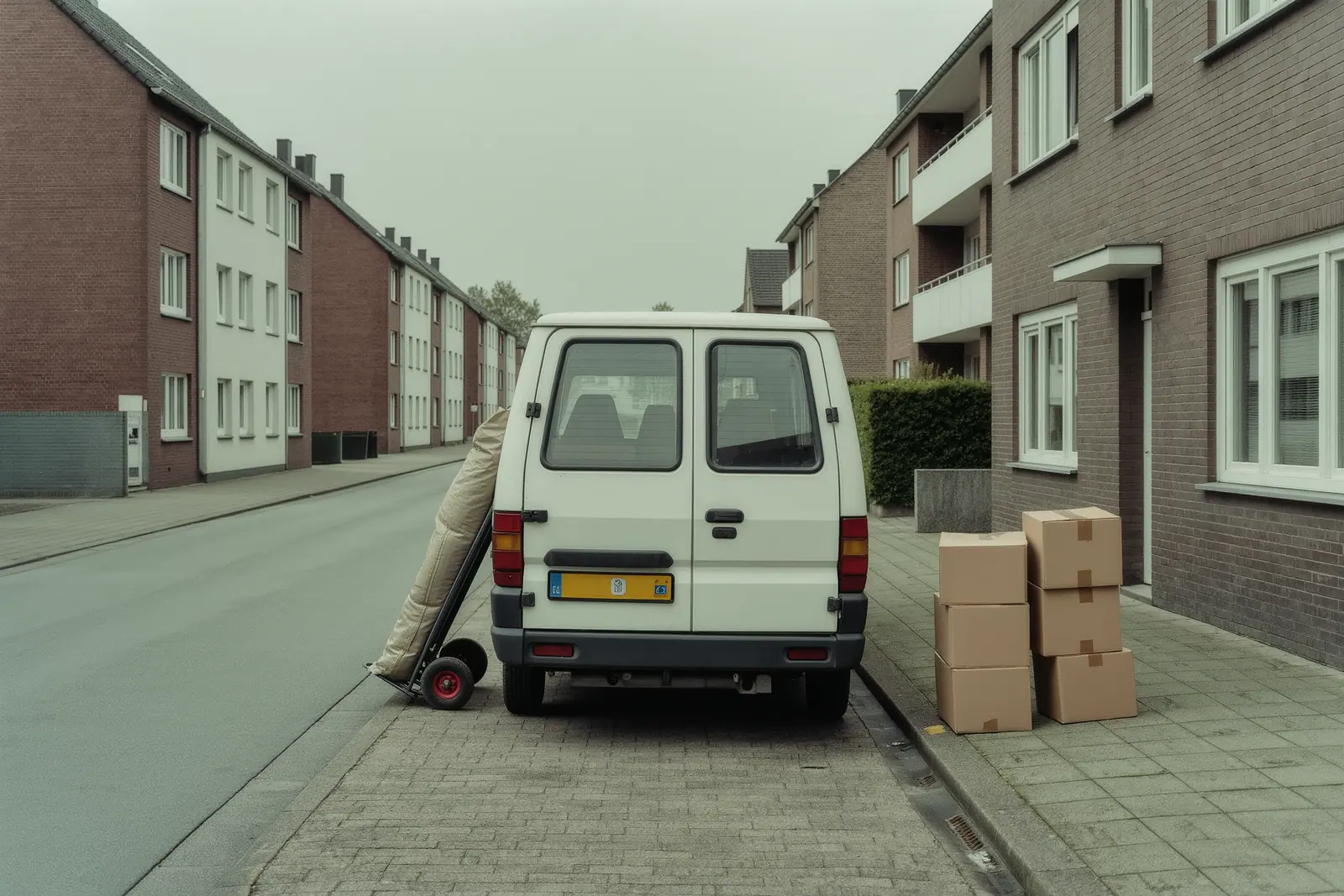
The flat is on the fourth floor of a courtyard block off Ackerstraße, the staircase turns twice on itself, and there is a cycle lane between the front door and the nearest place a van can stop. That is a Flingern move, and the vehicle is the easy part of it.
What decides whether the day takes five hours or eleven is the distance between the tailgate and the front door. Everything below is about shortening that distance legally.
The parking suspension is the whole job
You cannot reserve a stretch of kerb by putting a chair on it. What you can do is apply for a temporary suspension: a short section of street signed as no-parking for a stated window, in your name, so the space is legally clear when the van arrives.
Three things about it that people get wrong.
- It needs lead time. The application goes in days or weeks ahead, not the evening before. The exact minimum, the fee and whether you or a contractor may erect the signs are all set by the city and do change, so check the current requirement rather than what a friend did two years ago.
- The signs must stand for a notice period before your window opens. That is what makes them enforceable against a car that was already there. Signs put out on the morning of the move protect nothing.
- Somebody still has to move a car that ignored them. If a vehicle is parked inside a properly signed and properly noticed zone, the removal is a call to the authorities and a wait, not a shouting match. Build an hour of slack into the schedule for that possibility.
Without the suspension, the realistic outcome on a Flingern weekday is a stop forty to eighty metres away, often on the far side of a cycle lane, with the hazard lights on and a moral obligation to be quick. That is the difference between a medium van doing two easy trips and a long day of carrying.
Choosing the van for these streets
| Van | Roughly what it holds | Where it works here | Where it does not |
|---|---|---|---|
| Car-derived van | A room of boxes, no furniture | Anywhere, including courtyards | Anything with a wardrobe in it |
| Medium panel van | A one-bedroom flat in two trips | Most Flingern and Bilk streets | Very tight courtyard arches |
| Long wheelbase, high roof | A two-bedroom flat in one trip | Wide streets, corner plots | Height barriers, tram-track streets, reversing at a junction |
| Box van with tail lift | The same, plus heavy items | Only with a proper suspension | Narrow side streets entirely |
The high-roof version is where enthusiasm meets a height barrier. Anything over about two metres is excluded from most underground car parks and from a good number of courtyard entrances in the older blocks, and the ones with an arch are lower again. If your route in or out involves any structure at all, measure it.
The other constraint is the staircase. Nineteenth-century courtyard buildings in this district have narrow winders and half-landings, and a three-seat sofa that came in through a window is going out through one too. That is worth knowing before you rent the larger van on the assumption it will all fit.
The days nobody should move on
Domestic tenancies here mostly start and end with the month, so the demand curve is brutal and predictable. The last three working days of any month, plus the first two of the next, are when the small-van fleet across the whole city is committed. Saturdays in that window are worse.
Two other pressures are specific to Düsseldorf and are invisible if you only look at the calendar:
- The fortnight around a large fair. Stand builders hire the same medium vans you want, in volume, for build-up and break-down. A four-day event takes vans out of the market for roughly ten days. The pattern is set out in hiring a car in the exhibition weeks.
- Event weekends on the river. Days when the riverside closes for a large public event change every route across the inner districts, and the bridges queue. Moving on one of those Saturdays is a self-inflicted problem — the calendar of them is in bike hire on Japan Day and other crowd days.
Mid-month, mid-week, outside the fair fortnights, is a genuinely different city to drive a van in. Rates soften too, most of all in the middle of August.
What the hire actually includes
Assume nothing beyond the vehicle. Straps, blankets, a sack truck and a ramp are separate items at most counters and they are the things that decide whether the load survives. Check whether the van comes with a full tank and on what policy, because van fuel policies are less standardised than car ones.
Insurance on vans deserves a slower read than on cars. The excess is typically higher, roof and underside damage is excluded more often than not, and loading damage — a corner taken out of the load floor, a scraped side wall — sits in an awkward area that some contracts cover and some do not. If you are moving anything heavy, ask specifically about interior damage before you sign.
If the move is small, price the alternative
Flingern to Bilk is about four kilometres of flat city. A studio move, done in stages over a weekend, is a real option on a hired cargo bike, and it needs no parking suspension at all — which in these streets is worth more than the load capacity you give up. That trade-off is worked through in cargo bike hire for a city move.
For anything with a wardrobe in it, hire the van, book the kerb, and move on a Tuesday.
What to check before you book
- Measure the stairwell turn and the front door width before you choose a van size. In the older Flingern blocks the staircase, not the van, is the limit.
- Apply for the temporary parking suspension well ahead and confirm the notice period the signs have to stand for. Both the lead time and the procedure are set locally and change.
- Check the total permitted weight on the vehicle document against what your licence category allows, and remember the load counts.
- Confirm the van height and compare it with the barrier at any courtyard or underground car park you plan to use.
- Ask whether the hire includes a tail lift, a sack truck, straps and blankets, or whether those are separate line items collected from a different counter.
- Avoid the last three working days of the month and the first two. That is when the domestic fleet is fully booked across the whole city.
- Photograph the roof and the load floor at handover as well as the sides. Roof damage on a hired van is common and rarely noticed until the return.
Questions people actually ask
- Do I need a permit to park a hire van outside my flat while I load?
For a move you normally need a temporary parking suspension, which is a short stretch of kerb signed off to you for a set period. It is applied for through the city and the signs have to be in place for a notice period before the day, otherwise a car parked there first is legally parked and stays. Lead times, fees and who may put the signs up are all set locally, so confirm the current procedure with the city before you fix a date.
- What size van fits the Flingern side streets?
A medium panel van, roughly the size that still parks in a normal bay, handles almost every inner-city move here. The long-wheelbase high-roof version carries far more but needs a straight run at the kerb and will not clear most courtyard entrances or underground car parks. Two trips in a medium van usually beats one trip in a large one once you count the manoeuvring.
- Which licence do I need for a 3.5 tonne van?
The standard car category covers vehicles up to a total permitted weight that is set nationally, and most hire vans are built to sit just inside it. What catches people out is that the limit is the loaded weight, not the empty one. Check the figure on the vehicle document and confirm with the operator that your licence, and its date of issue, covers the van you are being given.
- When is the cheapest time to hire a van here?
Mid-month, mid-week, and away from the fair calendar. Domestic tenancies mostly turn over at the end of the month, so the last and first days are the peak, and the weeks around a large exhibition pull the same vans into stand building. The middle two weeks of August are the softest of the year.
- Can I keep the van overnight?
Most operators will price a twenty-four hour hire, but where you leave it is your problem. On-street overnight parking for a van in Flingern is scarce and the resident bays are heavily used, so plan a legal spot before you commit to an overnight rate rather than driving around at eleven looking for one.